31/07/1901 – 12/05/1985
Jean Dubuffet, born in 1901 in Le Havre and passed away in 1985 in Paris, was a major French painter, sculptor, and visual artist of the 20th century. An essential figure in contemporary art, he is renowned for challenging traditional artistic codes by promoting a more instinctive, free, and spontaneous form of creation. From an early stage, Dubuffet rejected academic conventions and developed a unique artistic language that was raw, experimental, and deeply unconventional.
He is best known as the founder of Art Brut, a movement highlighting works created outside traditional artistic circles. Fascinated by the creations of self-taught artists, children, and psychiatric patients, Dubuffet saw in these works a rare authenticity, untouched by cultural influence or imposed artistic rules. This revolutionary vision would profoundly transform the history of modern art.
His work is characterized by thick textures, unusual materials, and deliberately naïve or fragmented compositions. Through his paintings, sculptures, and drawings, Dubuffet sought to reconnect with a primitive and instinctive form of creative freedom. His artworks play with relief, contrast, and spontaneous lines, creating a universe that is instantly recognizable.
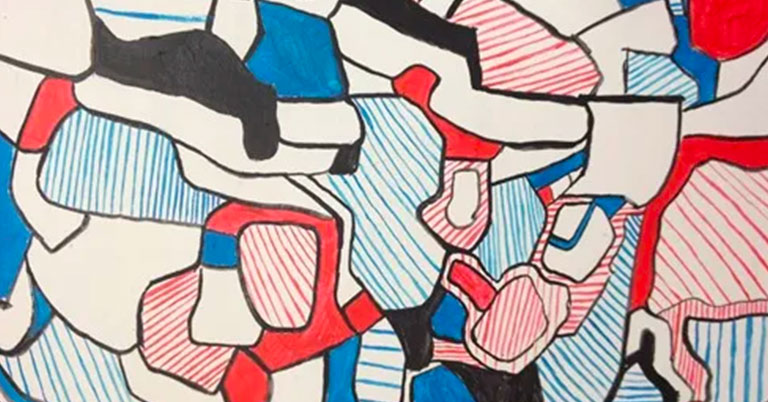
Among his most iconic series is L’Hourloupe, a collection of works featuring black, red, blue, and white patterns forming a labyrinthine and organic world. This body of work later inspired monumental sculptures and immersive environments exhibited around the world. Through it, Dubuffet expressed a vibrant, unconventional, and liberated vision of art.
Jean Dubuffet’s legacy continues to inspire artists, designers, and creators today. His bold approach, fascination with free forms, and rejection of established norms make his work a timeless source of inspiration, celebrating personal expression and limitless creativity.